

 By
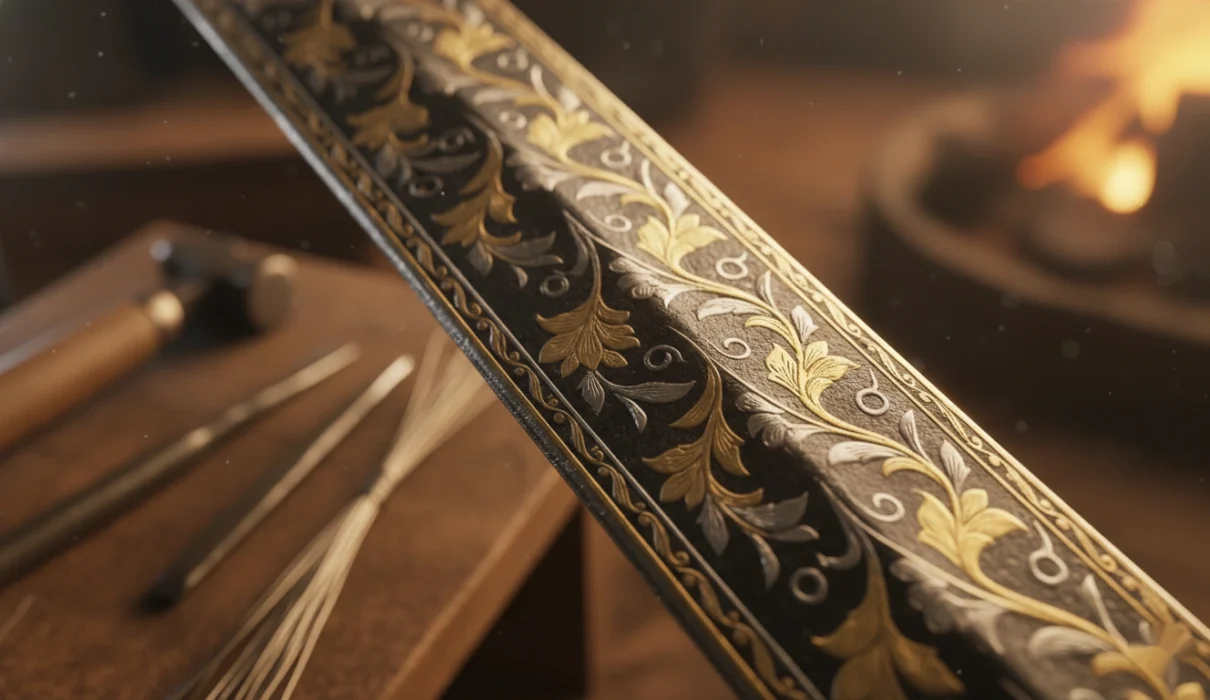
By Koftgari art is one of India’s most beautiful and detailed traditional crafts. It is a form of metal decoration where fine gold or silver wire is carefully inlaid onto iron or steel surfaces. You will often see it on swords, shields, jewelry boxes, and decorative items.
This craft is not just about decoration. It carries history, culture, and the skill of artisans passed down through generations. In this guide, you will learn what Koftgari art is, its origin, how it is made, and why it still holds value today.
What is Koftgari Art?
Koftgari is a traditional technique of embedding thin wires of gold or silver into the surface of iron or steel. The word “Koftgari” comes from Persian, meaning “to beat” or “to hammer,” which reflects the process used in this craft.
Unlike engraving, Koftgari does not cut deep into the metal. Instead, the surface is roughened, and the precious metal is pressed into it, creating elegant patterns and designs.
History and Origin of Koftgari
Koftgari art has strong roots in the Middle East and Central Asia. It was brought to India during the Mughal period, where it became highly popular among royal families.
Cities like Sialkot and Lahore were famous for producing Koftgari work on weapons. In India, regions such as Rajasthan and Punjab became important centers for this craft.
During the rule of Mughal Empire, Koftgari was widely used to decorate swords, armor, and royal items. These pieces were not only functional but also symbols of power and status.
How Koftgari Art is Made
Creating Koftgari art requires patience, precision, and years of practice. The process involves several steps:
1. Surface Preparation
The iron or steel surface is first cleaned and roughened using fine tools. This helps the gold or silver wire stick properly.
2. Design Creation
The artisan draws or marks the design on the metal. These designs are often floral, geometric, or inspired by nature.
3. Inlay Work
Thin wires of gold or silver are carefully hammered into the roughened surface. This step requires great skill to ensure the wires stay in place.
4. Finishing
The surface is polished, and sometimes treated with natural chemicals to darken the background. This makes the gold or silver design stand out clearly.
Common Designs in Koftgari
Koftgari art is known for its detailed and elegant patterns. Some common designs include:
- Floral patterns inspired by Mughal gardens
- Geometric shapes and borders
- Calligraphy and traditional motifs
- Animal and nature-inspired designs
Each piece is unique because it is handmade.
Where Koftgari is Used
Traditionally, Koftgari was used to decorate weapons and armor. Today, it is used in many decorative and collectible items, such as:
- Swords and daggers
- Jewelry boxes
- Decorative plates
- Antique replicas
- Home décor items
Collectors and history lovers value these items for their craftsmanship and cultural importance.
Koftgari in Indian Sword Culture
Koftgari has a strong connection with Indian swords, especially in regions like Rajasthan. Royal swords were often decorated with gold inlay to show wealth and prestige.
Many traditional swords, like the Talwar, featured Koftgari work on the blade or hilt. These swords were not just weapons but also works of art.
Why Koftgari Art is Special
There are many reasons why Koftgari stands out:
Handmade Craft
Every piece is made by hand, which makes it unique.
Cultural Value
It reflects the rich history of Indian and Mughal craftsmanship.
Skilled Work
It takes years for an artisan to master Koftgari techniques.
Rare Craft
Today, fewer artisans practice this art, which makes it even more valuable.
Challenges Faced by Koftgari Art
Like many traditional crafts, Koftgari is facing challenges:
- Decline in skilled artisans
- Less demand compared to modern designs
- Time-consuming process
- High cost of materials like gold and silver
Because of these issues, the craft is slowly fading in some areas.
How to Identify Genuine Koftgari Work
If you are planning to buy Koftgari items, here are some simple tips:
- Look for fine and detailed patterns
- Check if the inlay is smooth and well-fixed
- Avoid pieces with glued or printed designs
- Buy from trusted sellers or artisans
Authentic Koftgari work will always show signs of hand craftsmanship.
How to Care for Koftgari Items
Proper care can help your Koftgari items last for many years:
- Keep them dry to prevent rust
- Avoid harsh chemicals
- Clean gently with a soft cloth
- Store in a dry place
Taking care of these items helps preserve their beauty and value.
The Future of Koftgari Art
Efforts are being made to revive Koftgari art. Many artisans and organizations are working to promote it through exhibitions and online platforms.
With growing interest in handmade and traditional crafts, Koftgari has the potential to gain popularity again. Supporting local artisans can help keep this art alive.
Conclusion
Koftgari art is more than just decoration. It is a reflection of history, skill, and cultural heritage. From royal swords to modern décor items, this craft continues to impress with its beauty and detail.
If you are interested in traditional crafts or collecting unique items, Koftgari is worth exploring. By supporting this art, you also help preserve an important part of history.
References
- The Metropolitan Museum of Art – Islamic Arms and Armor Collection
https://www.metmuseum.org - Victoria and Albert Museum – Metalwork and Decorative Arts
https://www.vam.ac.uk - Crafts Council of India – Traditional Metal Crafts
https://www.craftscouncilofindia.org - Encyclopaedia Britannica – Mughal Art and Craft
https://www.britannica.com
