

 By
By Table of Contents
Beginner vs Advanced Sword Specs Comparison
At first glance, many swords look almost the same. But once you start comparing specs, the differences between beginner and advanced swords become very clear.
A beginner sword is usually built to be affordable, durable, and easy to use. An advanced sword is designed for refined handling, better performance, historical accuracy, and long-term durability.
This guide explains the major differences in simple terms so you can understand what actually matters before buying a sword.
TL;DR
- Beginner swords focus on affordability and durability.
- Advanced swords focus on balance, handling, and performance.
- Better steel alone does not make a better sword.
- Heat treatment and balance matter more than most people think.
- Advanced swords feel faster and more responsive.
- Beginners should prioritize safety and reliability first.
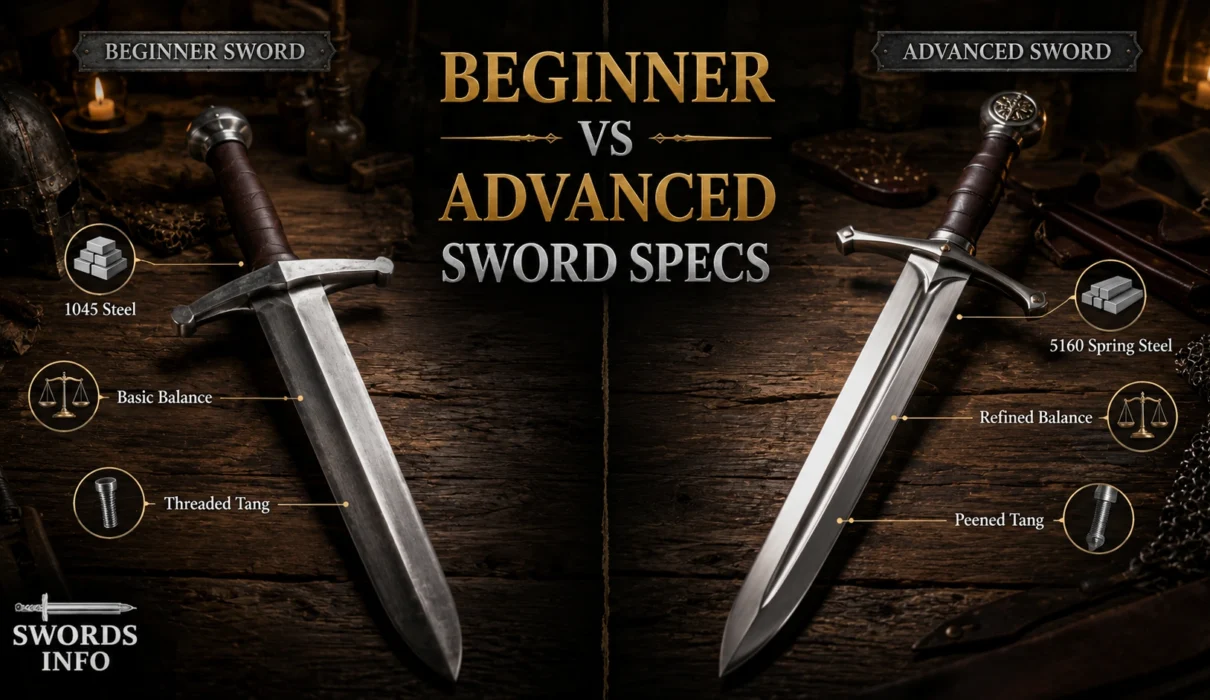
Beginner vs Advanced Sword Visual Comparison
Beginner Sword Features

Typical beginner swords usually have:
- Simpler fittings
- Basic polish
- Thicker blade geometry
- Machine-made construction
- Budget-friendly materials
Advanced Sword Features

Advanced swords often include:
- Refined blade geometry
- Better polish and finish
- Hand-fitted guards and handles
- Premium heat treatment
- More historical accuracy
Why Sword Specs Matter
Sword specs affect:
- Handling speed
- Cutting ability
- Durability
- Comfort
- Balance
- Safety
A sword that looks beautiful online may feel awkward in the hand if the balance is poor.
Experienced users often care more about handling than appearance.
Blade Steel Comparison
Steel type is one of the most discussed sword specs online.
Beginner Sword Steels

Common beginner steels include:
- 1045 carbon steel
- 1060 carbon steel
- Stainless steel
Pros
- Affordable
- Durable enough for casual use
- Easier maintenance
Cons
- Softer edges
- Lower edge retention
- Less refined cutting performance
Advanced Sword Steels

Advanced swords often use:
- 5160 spring steel
- 1095 steel
- T10 steel
- L6 steel
Benefits
- Better edge retention
- Improved flexibility
- Cleaner cutting performance
- Higher durability when properly heat treated
Weight and Balance Differences
One of the biggest differences between beginner and advanced swords is balance.
Beginner Sword Balance

Many beginner swords feel:
- Blade heavy
- Slower
- Less responsive
Manufacturers often leave extra steel in the blade to reduce production mistakes.
Advanced Sword Balance

Advanced swords usually feel:
- Faster
- Better balanced
- Easier to control
- Less tiring during use
Even if the weight is similar, the handling difference is noticeable.
Tang Construction Comparison
The tang is the hidden part of the blade inside the handle.
Beginner Sword Tang Types

Budget swords may use:
- Threaded tangs
- Welded rod tangs
- Simplified assembly
These methods reduce cost but may weaken durability.
Advanced Sword Tang Types

Advanced swords often use:
- Full tang construction
- Peened tangs
- Hand-fitted grips
These designs improve strength and stability.
Historical Accuracy
Collectors and historical martial artists care heavily about accuracy.
Beginner Sword Accuracy

Budget swords often:
- Mix historical styles
- Use oversized parts
- Simplify blade shapes
- Focus more on appearance
Advanced Sword Accuracy

Premium swords usually aim for:
- Accurate dimensions
- Correct blade geometry
- Historical weight distribution
- Authentic fittings
Beginner vs Advanced Sword Specs Table
| Feature | Beginner Sword | Advanced Sword |
|---|---|---|
| Steel | 1045, stainless | 5160, T10, L6 |
| Balance | Basic | Highly refined |
| Tang | Threaded or simple | Peened/full tang |
| Accuracy | Moderate | High |
| Manufacturing | Mostly machine-made | More hand-finished |
| Cutting | Casual use | Serious cutting |
| Price | Lower | Higher |
| Handling | Heavier feel | Faster response |
Which Sword Type Is Best for You?
Choose a Beginner Sword If You:
- Are new to swords
- Want a display piece
- Practice light cutting
- Have a limited budget
- Want easy maintenance
Choose an Advanced Sword If You:
- Practice martial arts seriously
- Study historical fencing
- Want authentic handling
- Appreciate craftsmanship
- Perform regular cutting practice
Biggest Mistakes Beginners Make
Buying Only Based on Looks
A flashy sword may still handle badly.
Ignoring Tang Construction
Weak tangs can become unsafe during cutting.
Assuming Heavy Means Better
Real historical swords were often lighter than people expect.
Believing Marketing Terms
“Battle ready” does not always mean high quality.
Always check:
- Steel type
- Tang construction
- Heat treatment
- Seller reputation
Final Thoughts
The real difference between beginner and advanced sword specs is refinement.
A beginner sword can still be enjoyable, functional, and durable. But advanced swords offer better balance, smoother handling, cleaner cutting, and more accurate craftsmanship.
Most people do not need a premium sword when starting out. A reliable beginner sword is usually the smarter first purchase.
As your experience grows, you will naturally start noticing the details that separate good swords from exceptional ones.
FAQ
Are expensive swords always better?
Not always. Some mid-range swords perform extremely well. Price should match your actual needs.
What is the best beginner sword steel?
1060 carbon steel is one of the safest and most reliable beginner choices.
Why are advanced swords lighter?
Advanced swords often use refined blade geometry and better balance instead of relying on extra weight.
What matters more: steel or heat treatment?
Heat treatment usually matters more than steel type alone.
