

 By
By Table of Contents
TL;DR
Displaying a sword at home comes down to three things: safety, preservation, and aesthetics. The most popular methods are wall mounts (horizontal or vertical), lockable glass display cases, freestanding tabletop stands, and shadow box frames. Always keep swords away from direct sunlight, maintain 40–60% relative humidity, use felt-lined hardware to avoid scratches, and anchor everything securely if children or pets are in the home. For antique or valuable blades, climate-controlled cases with UV-filtering glass are your best investment.
Introduction
So you’ve just acquired a stunning katana, a hand-forged medieval longsword, or perhaps an heirloom cavalry saber — and now you’re staring at it wondering, where on earth do I put this thing?
You’re not alone. Sword collectors and enthusiasts across the world face the same challenge: how do you showcase a blade in a way that honors its craftsmanship, keeps it safe from damage, and actually looks great in your home without turning your living room into a prop warehouse?
The good news is there are more options than ever before, from minimalist hardwood wall mounts to museum-grade glass enclosures. Whether you own a functional battle-ready blade or a decorative display piece, this guide covers every major method with practical advice grounded in real collector experience and preservation standards.
Let’s get into it.
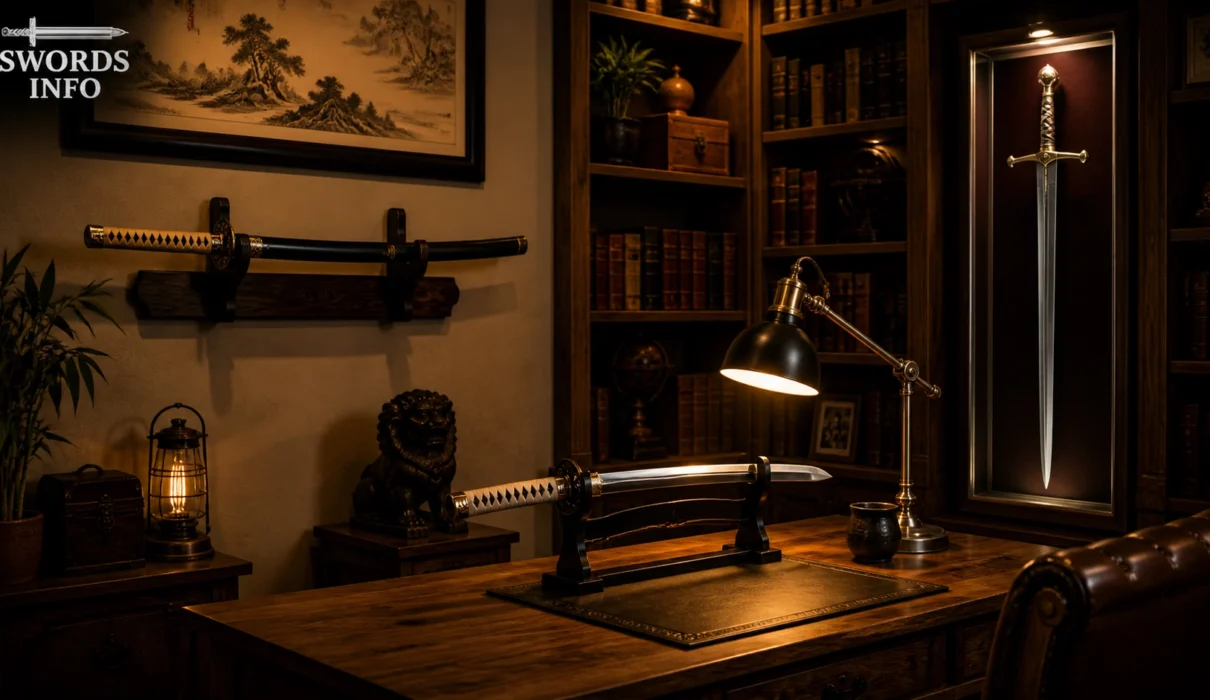
1. Wall-Mounted Sword Racks — The Most Popular Option
Wall mounting is, by far, the most common way collectors display their blades at home — and for good reason. It turns any room into a gallery, keeps the sword visible and admired, and frees up shelf and floor space.
Horizontal vs. Vertical Mounting
Horizontal mounts are the traditional choice for Japanese swords like katana, wakizashi, and tanto. They allow viewers to appreciate the full length of the blade and highlight details like the hamon (temper line) without obstruction. According to TrueKatana’s display experts, a horizontal mount lets you lift the sword down two-handed in the same motion you would use to draw it from a traditional display rack — natural, safe, and fast.
Vertical mounts, on the other hand, emphasize a sword’s length and visual grace. They work particularly well for European arming swords, rapiers, and broadswords. A good rule of thumb: one blade goes horizontal; two blades work best on a double-tier horizontal rack; three or more call for a multi-tier horizontal setup.
Choosing the Right Hardware
Always look for mounts that feature felt-lined pegs or cradles. The saya (scabbard) is the most vulnerable part of any displayed sword — its lacquer finish marks easily, absorbs oil from skin contact, and wears from hard contact surfaces. A good mount protects the saya with felt padding on every contact point and correctly-sized pegs that cradle without squeezing.
Popular material options include solid rosewood, dark walnut, and acrylic. Acrylic wall mounts from suppliers like Better Display Cases offer crystal-clear visibility and support both horizontal and vertical orientations for everything from katana to European sabers.
Pro tip: Always drill into wall studs, not just drywall. If you have plaster walls (common in homes built before the 1960s), use a masonry bit and longer screws to ensure a secure anchor point.
2. Glass Display Cases — Best for Preservation and Security
If your blade has real monetary or sentimental value, a glass or acrylic display case is the smartest investment you can make. These enclosures protect swords from dust, humidity fluctuations, UV light damage, accidental contact, and — if lockable — unauthorized handling.
What to Look For in a Good Display Case
The best sword display cases share a few key features: UV-filtering glass or acrylic (to prevent fading of handle wrappings and scabbard finishes), a felt or velvet interior lining, adjustable LED lighting, and a secure locking mechanism.
Modern display cases offer a sleek and contemporary way to showcase swords while providing protection from the elements. Look for cases with UV-filtering acrylic or glass to prevent fading and damage from sunlight, and consider features like locking mechanisms for added security.
For serious collectors, purpose-built enclosures like the Secure Display Sword Safe use 14-gauge steel and ballistic glass for maximum protection while still presenting blades museum-style with adjustable LED lighting and remote brightness control.
Japanese Sword Cases (Katana-Specific)
Traditional Japanese sword cases — often called tansu-style display boxes — incorporate fine lacquerwork and are designed to honor the cultural significance of the blade. Contemporary makers like Keisuke Nakamura’s Katana Case Shi use non-reflective acrylic that blocks 99.9% of UV rays and is intentionally softer than glass to avoid chipping the blade tip if accidental contact occurs.
3. Freestanding Tabletop Stands — Flexible and Accessible
Not everyone wants to drill holes in their walls, and that’s completely fine. Tabletop sword stands are one of the most versatile and approachable display solutions, particularly for collectors who like to handle their swords regularly or rotate their displays seasonally.
These stands typically come in wood (oak, walnut, rosewood), metal, or acrylic. Wooden stands pair beautifully with traditional Japanese or medieval European aesthetics, while metal and acrylic options suit more modern interiors. Most tabletop stands hold one to three swords in tiered horizontal slots.
They’re ideal for desks, bookshelves, mantelpieces, and entryway tables. If you own a daisho set (katana and wakizashi together), a two-tier wooden stand is the traditional display pairing and an immediate conversation starter.
Safety note: If you have pets or young children, tabletop stands are the least secure option. Consider switching to wall mounts or locking cases in those situations.
4. Shadow Box Frames — A Gallery-Worthy Presentation
Shadow boxes elevate sword display into something closer to fine art. These deep-framed enclosures mount directly to the wall and allow you to arrange a sword alongside related artifacts — coins, crests, rank insignia, historical photographs, or explanatory plaques — creating a narrative display that tells the story behind the blade.
It’s important to use the right materials in shadow box frames. Choose frames made with high-quality materials that won’t hurt your swords over time. Use acid-free backing and special glass that blocks harmful light.
Shadow boxes work especially well for military swords, ceremonial sabers, and family heirloom blades. Many military gift suppliers offer custom-engraved versions that include space for rank insignia, service emblems, and medals alongside the sword — making them a popular choice for veteran recognition and retirement ceremony gifts.
5. Themed Wall Displays — Create an Atmosphere
A themed wall display goes beyond simply hanging a sword — it creates an immersive visual experience that contextualizes the blade within its historical or cultural world.
For a medieval or knightly aesthetic, pair a longsword or broadsword with a decorative shield, heraldic banners, or a faux-stone textured wall panel. Gothic-style sword hangers from suppliers like By the Sword offer ornamental brass and pewter hardware that reinforces the period feel without looking costumey.
For a Japanese-inspired setup, flank a mounted katana with calligraphy scrolls, bamboo accents, or a small bonsai shelf. The contrast of organic materials against polished steel is visually striking and deeply traditional.
For an anime or pop-culture collection, LED strip backlighting behind wall-mounted blades creates a dramatic effect that cases simply cannot replicate.
6. Floating Shelves — Space-Saving and Modern
Floating shelves offer a clean, minimalist alternative to traditional wall mounts. Clear acrylic or glass shelves create the illusion that the sword is hovering against the wall — a sleek, contemporary look that works well in modern homes and home offices.
Floating shelves save space and make your room look awesome. These shelves make your swords look like they’re floating on the wall, giving a simple and stylish look. You can use clear plastic shelves to make the floating effect even better — the see-through material lets light shine through, making your display look even cooler.
This approach pairs well with accent lighting placed above or beneath the shelf to illuminate the blade dramatically. Wooden bracket variants offer a warmer, more rustic look that complements medieval or Viking-style swords beautifully.
7. Lighting Your Display — The Detail Most Collectors Get Wrong
Good lighting transforms a sword display from “cool shelf thing” to genuine showpiece. The goal is to highlight the blade’s craftsmanship — the edge geometry, surface polish, engravings, and handle wrapping — without creating harsh glare or damaging the piece over time.
For optimal lighting, the Illuminating Engineering Society recommends maintaining light levels between 200 to 300 lux in general living spaces. Aim for a warm-neutral color temperature of 3000–3500K to enhance wood and leather finishes; a cooler 4000K brings out etched details on steel. Position accent lights above or slightly in front of the blade at an angle of 30–45 degrees and maintain a Color Rendering Index (CRI) above 90 for accuracy in color on scabbards and wraps.
Always use LED lighting rather than incandescent bulbs — LEDs run cool, meaning no heat damage to lacquer or leather, and they consume far less energy for 24/7 display use. Avoid positioning any display directly opposite a sunlit window, as UV exposure causes irreversible fading of tsuka (handle) wrappings, dyed scabbards, and decorative cord.
8. Environmental Conditions — The Invisible Factor That Ruins Collections
The biggest threat to any displayed blade isn’t poor aesthetics or bad hardware. It’s the environment.
Direct sunlight, high humidity, heat sources, and high-traffic areas are the four biggest threats to any displayed sword. UV rays bleach decorative wrappings and fade painted finishes. Humidity causes rust on carbon steel and warps wooden scabbards. Heat cycling causes metal to expand and contract, loosening fittings over time.
The consensus across preservation experts is clear: maintain a stable temperature between 65–75°F (18–24°C) and a relative humidity of around 50–60%. Avoid displaying your sword near heat sources like radiators, fireplaces, or direct sunlight.
For carbon steel blades, apply a thin coat of mineral oil or traditional choji oil every three to six months. Never touch an exposed blade with bare hands — skin oils accelerate surface corrosion even on stainless steel. Use a soft microfiber cloth for dusting.
Quick Comparison: Which Display Method Is Right for You?
| Method | Best For | Space Needed | Security | Preservation |
|---|---|---|---|---|
| Wall mount (horizontal) | Katana, longswords, most blades | Wall space | Medium | Medium |
| Wall mount (vertical) | Rapiers, European swords | Minimal | Medium | Medium |
| Glass/acrylic case | Antique, valuable, ceremonial blades | Shelf/floor | High | High |
| Tabletop stand | Rotating displays, regular handling | Desk/shelf | Low | Low |
| Shadow box | Military, heirloom, ceremonial | Wall space | High | High |
| Themed wall display | Collections, decorative blades | Wall space | Medium | Low–Medium |
| Floating shelves | Modern interiors, single pieces | Wall space | Low | Low |
Frequently Asked Questions
Is it legal to display a sword at home?
In most countries, displaying a sword in your private home is completely legal, though laws vary by region regarding blade length and type. Always check your local regulations, particularly for concealed carry or transportation laws. Britannica’s overview of sword history and regulation provides useful historical context, and your local authority’s website will have current legal guidance.
How high should I mount a sword on the wall?
Eye level — approximately 57–60 inches from the floor to the center of the display — is the standard gallery height. This ensures the blade is comfortably viewable without neck strain and keeps it out of easy reach of children.
Should I display my sword in or out of its scabbard?
For decorative display, keeping the blade sheathed (in the scabbard or saya) is often preferred — it protects the edge and finish from airborne moisture and dust. However, displaying an unsheathed blade is visually dramatic and lets viewers appreciate the steel’s surface, hamon, and polish. If displayed bare, oil the blade before mounting and check it monthly.
What is the best material for a sword display stand?
Hardwoods like walnut, rosewood, and oak are the gold standard. They’re sturdy, look refined, and don’t react with steel the way some synthetic materials can. For a modern or minimalist look, high-clarity acrylic stands are an excellent alternative.
How do I keep children and pets safe around a wall-mounted sword?
Mount high — above 6 feet where possible — and use locking display cases for any sword at accessible height. Consider secondary cable anchors behind wall-mounted pieces. Never assume a mount alone is childproof.
Can I display a sword near a window?
Only if the window has UV-filtering film applied, or if the sword is in a UV-protective glass case. Direct sunlight exposure — even for a few hours a day — causes irreversible fading of handle wrappings, scabbard lacquer, and any colored fittings.
How do I stop my sword from rusting in a display?
Control humidity (keep it at 40–60%), oil carbon steel blades regularly, avoid rooms prone to temperature swings (like garages or basements), and use silica gel packs inside enclosed display cases.
Final Thoughts
Displaying a sword at home is equal parts art and science. The method you choose — whether that’s a simple rosewood wall rack or an elaborate themed showcase — should reflect both the significance of the blade and the space it lives in.
Start with the basics: secure mounting, proper humidity control, and good lighting. Then layer in the aesthetics. A well-displayed sword isn’t just décor. It’s a conversation, a piece of history, and a testament to extraordinary craftsmanship — and it deserves to be seen properly.
For more in-depth guides on individual sword types and their histories, explore the Swords Info encyclopedia.
References & Further Reading:
- Britannica — Sword: History and Types
- Tozando Katana Shop — The Perfect Guide to Displaying Your Japanese Sword
- Musashi Swords — Showcasing Your Swords: Effective Display Methods and Stands
- The Knight’s Collection — Display Medieval Swords for Decoration
- Homestyler — Sword Wall Display Guide: Expert Tips
