
 By
By Table of Contents
Introduction to Medieval Knight Swords
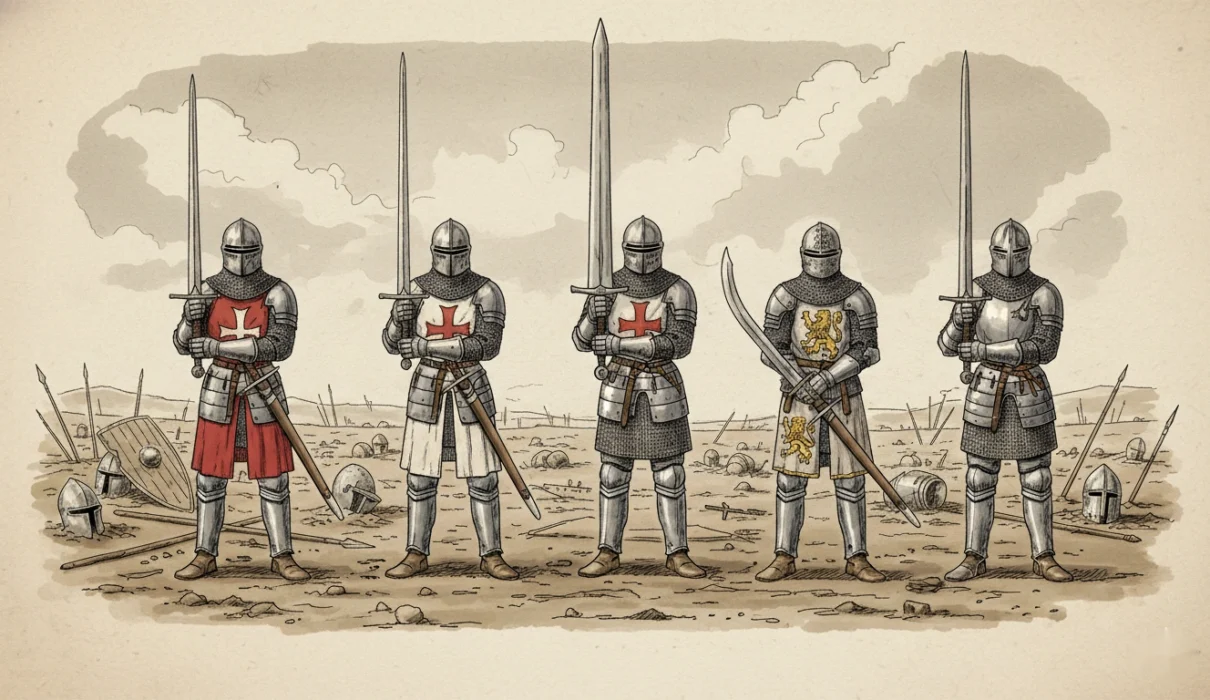
During the medieval period, which lasted from around the 5th to the 15th century, swords were one of the most important weapons used by knights. While other weapons like spears, axes, and maces were also common on the battlefield, the sword held a special place in a knight’s life. It was not just a tool for fighting, but a symbol of honor, loyalty, and social status. A knight’s sword was often carefully crafted, sometimes decorated, and in many cases passed down through generations. This made it more than just a weapon. It became part of the knight’s identity and legacy.
“A knight’s sword was not just steel, it was a mark of his honor.”
Swords were also very practical in combat. After the first clash in battle, when lances broke or became useless, knights relied on their swords for close fighting. Over time, as armor improved and battles became more complex, swords also changed in design. Some were made for cutting, while others were designed for thrusting into small gaps in armor. This constant development makes medieval swords an interesting subject for both history lovers and collectors.
Types of Swords Used by Medieval Knights
1. Arming Sword (Knightly Sword)
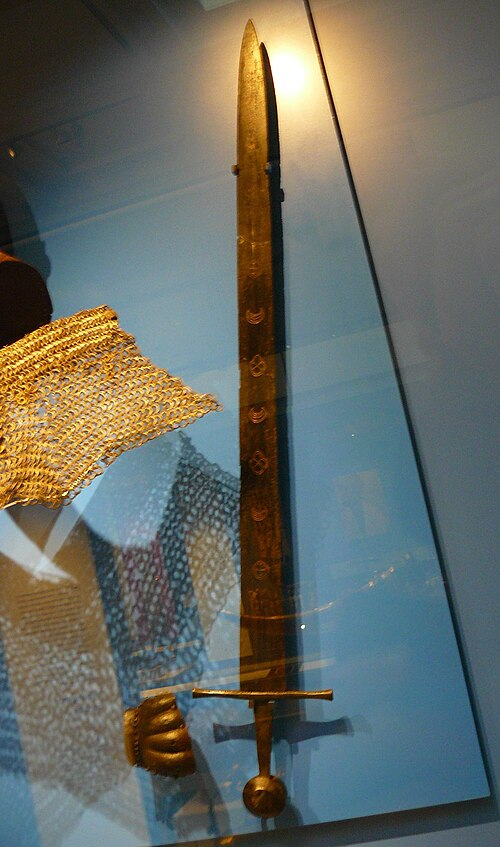
The arming sword was the most common weapon carried by medieval knights, especially in the early and high medieval periods. It had a straight, double-edged blade and a simple cross-shaped hilt. This design made it easy to use and well-balanced, which was important during fast-paced combat. Knights could use it with one hand, allowing them to carry a shield in the other hand for protection.
Key Features:
- Straight, double-edged blade
- One-handed grip
- Cross-shaped hilt
- Lightweight and balanced
Why Knights Preferred It:
- Easy to carry daily
- Fast and effective in combat
- Works well with a shield
In battle, the arming sword was mainly used for cutting and slashing. It worked best against lightly armored opponents, where sharp edges could cause serious damage. Even though it was not made to break heavy armor, skilled knights could still use it effectively by targeting weaker areas.
2. Longsword
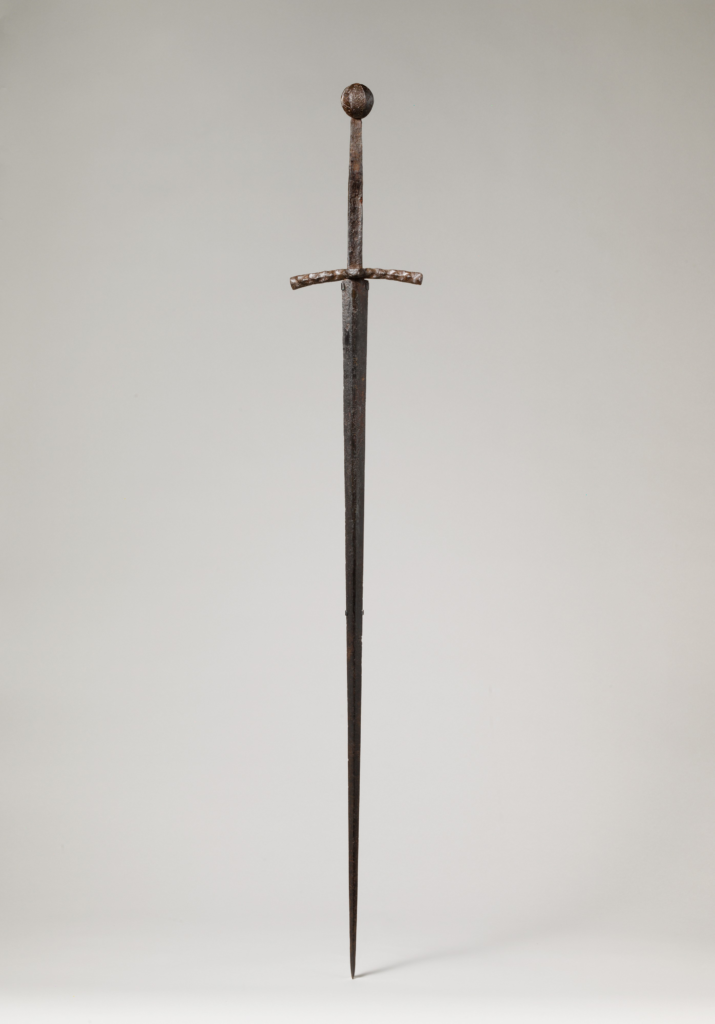
The longsword became more popular during the later medieval period when armor started becoming stronger. This sword had a longer blade and a longer handle, allowing it to be used with both one and two hands. This gave knights more power and better control during combat, making it one of the most versatile swords of the time.
Key Features:
- Longer blade than arming sword
- Two-handed or one-handed use
- Strong grip for better control
Combat Advantages:
- Greater reach
- More powerful strikes
- Better control in duels
Knights used the longsword for both cutting and thrusting. One important technique used with this sword was half-swording, where the knight would hold the blade with one hand to guide precise thrusts into armor gaps. This made the longsword very effective against heavily armored enemies.
“The longsword was a perfect balance between power and control.”
3. Greatsword (Two-Handed Sword)
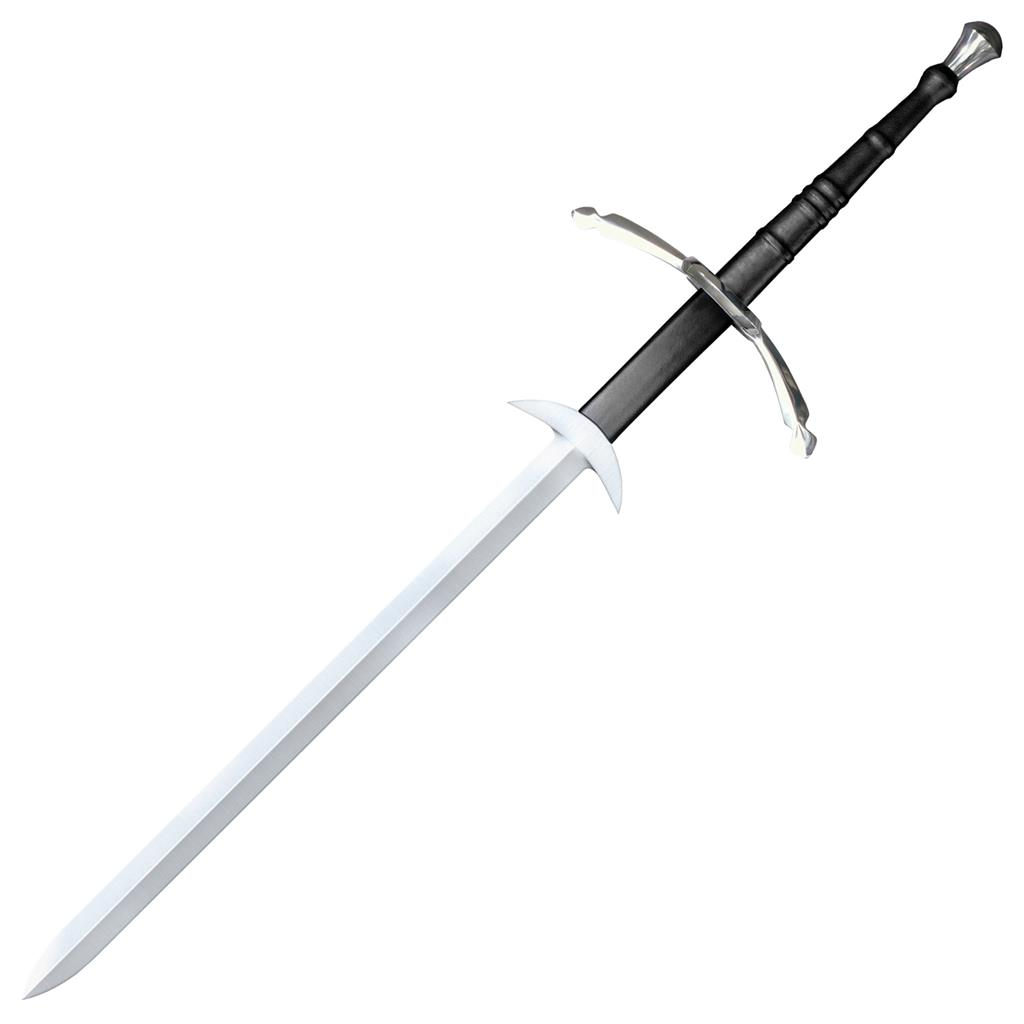
The greatsword was much larger than other swords and required both hands to use. It was not as commonly used as smaller swords, but it was very powerful in the right situations. The long blade allowed knights to strike from a distance and deliver heavy blows that could break enemy lines.
Key Features:
- Very long blade
- Requires two hands
- Heavy and powerful
Best Used For:
- Breaking enemy formations
- Fighting multiple opponents
- Creating space in battle
Because of its size, the greatsword required strength and skill. It was not suitable for tight spaces or quick movements, but in open battle, it could be very effective.
4. Falchion
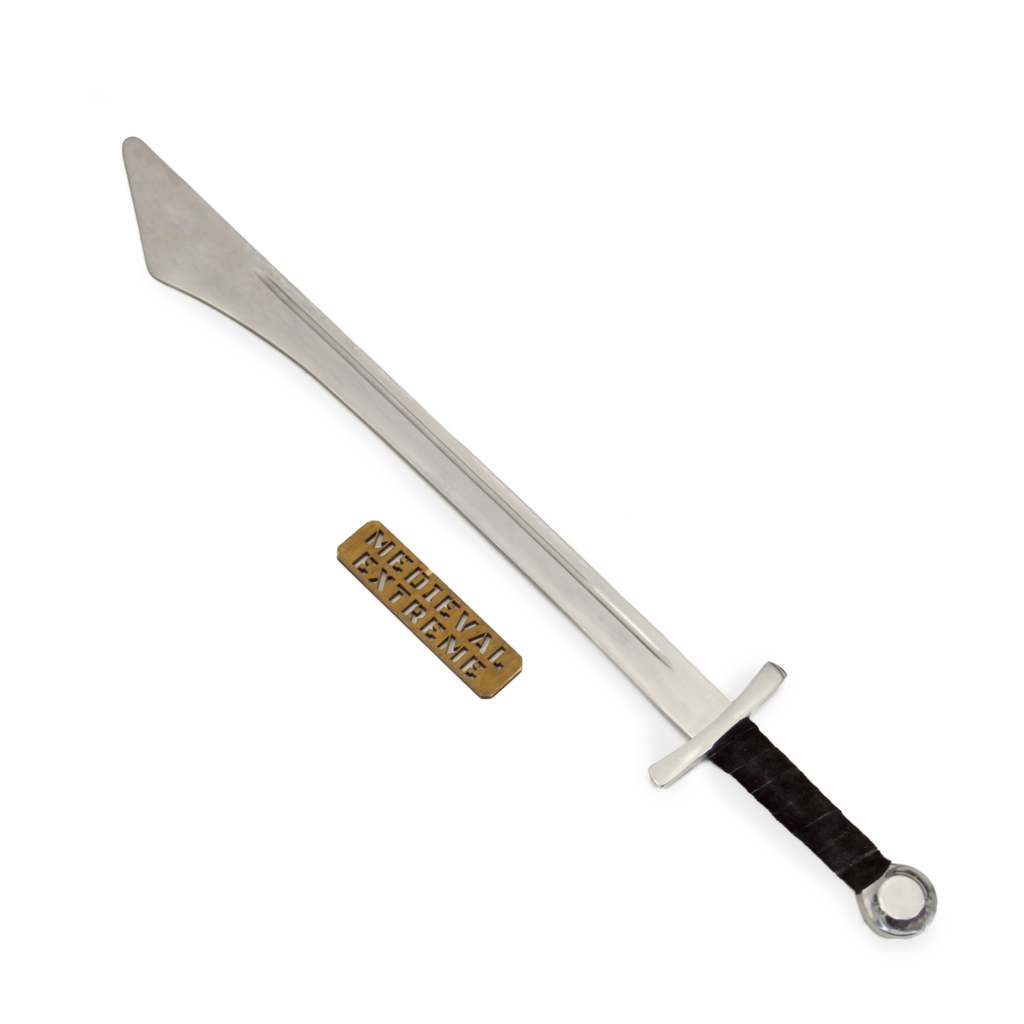
The falchion was different from most knightly swords because it had a curved, single-edged blade. It looked more like a large knife or machete. This design made it very effective for cutting and chopping attacks.
Key Features:
- Single-edged blade
- Slightly curved shape
- Lightweight and sharp
Advantages:
- Strong cutting power
- Easy to handle
- Less effort needed for deep strikes
The falchion was often used against lightly armored enemies. Its curved blade allowed it to deliver powerful cuts, making it a dangerous weapon in close combat.
5. Estoc
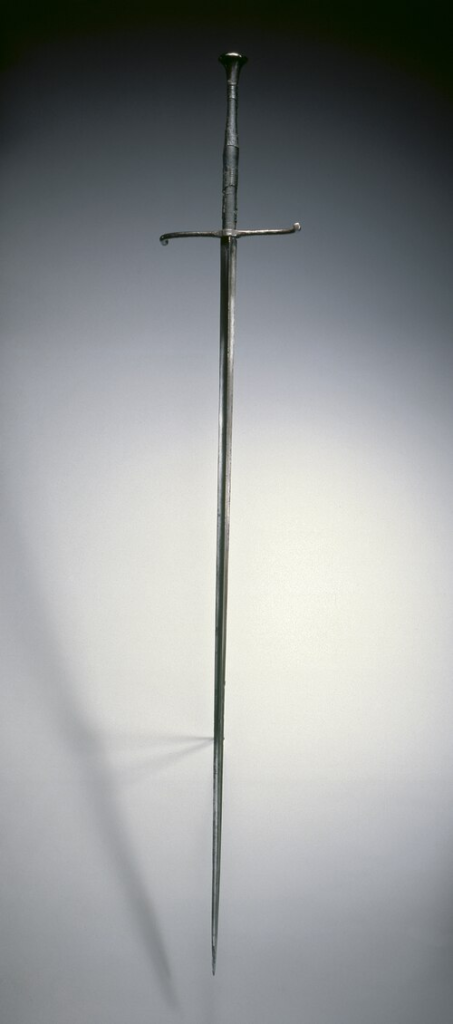
The estoc was designed specifically to deal with armored opponents. As armor became stronger, traditional cutting swords became less effective. The estoc solved this problem by focusing on thrusting attacks.
Key Features:
- Long, narrow blade
- Strong pointed tip
- Minimal or no cutting edge
Combat Use:
- Targeting gaps in armor
- Piercing joints and weak spots
- Precision attacks
Using an estoc required skill and accuracy. Knights had to aim carefully to hit vulnerable areas in armor.
“The estoc proved that precision can be more powerful than force.”
Materials Used in Medieval Swords
The quality of a sword depended greatly on the material used to make it. Early swords were made from iron, which was easy to shape but not very strong. Over time, blacksmiths started using steel, which was much stronger and more flexible.
Common Materials:
- Iron (early period)
- High carbon steel
- Pattern-welded steel
Pattern welding was a special technique where different metals were combined to create stronger blades. A skilled blacksmith could create a sword that was both hard and flexible, reducing the chance of breaking.
Important Factors in Sword Quality:
- Material used
- Skill of the blacksmith
- Heat treatment process
- Blade design
A well-made sword could last for many years and even be passed down as a family heirloom.
How Sword Design Changed Over Time
Sword design changed as warfare evolved. In the early medieval period, swords were mainly used for cutting because most enemies wore little armor. These swords had wide blades and sharp edges.
As armor improved, swords also changed.
Evolution of Sword Design:
- Early Period:
- Focus on cutting
- Wide blades
- High Medieval Period:
- Balanced cutting and thrusting
- Improved control
- Late Medieval Period:
- Focus on thrusting
- Designed for armor penetration
This change shows how weapons and armor developed together over time.
Importance of Swords for Knights
For knights, swords were not just weapons. They had deep meaning and value.
Why Swords Were Important:
- Symbol of status and wealth
- Part of knighthood ceremonies
- Connected to religion and belief
The cross-shaped hilt of many swords was seen as a symbol of faith. Knights often believed their sword had spiritual value and protection.
“To a knight, his sword was his honor, his duty, and his identity.”
Sword Fighting Techniques
Knights trained for years to master sword fighting. It required strength, skill, and discipline.
Common Techniques:
- Cutting: Used against unarmored enemies
- Thrusting: Used against armored opponents
- Half-swording: For precise control
- Parrying: Blocking attacks
Training Focus:
- Balance and footwork
- Timing and control
- Strength and endurance
A skilled knight could use his sword effectively in many situations, making it one of the most important weapons in battle.
Care and Maintenance of Medieval Swords
Taking care of a sword was very important. A poorly maintained sword could become rusty or dull.
Basic Maintenance Steps:
- Clean the blade after use
- Apply oil to prevent rust
- Sharpen regularly
- Check the handle and grip
Proper care ensured that the sword remained strong and ready for battle. Knights respected their weapons and took good care of them.
Conclusion
Swords used by medieval knights were carefully designed weapons that played a key role in warfare and daily life. From the simple and reliable arming sword to the powerful greatsword and precise estoc, each type had its own purpose. These swords were shaped by the needs of the battlefield and changed as armor and combat styles evolved.
Understanding these swords helps us better understand medieval history and the lives of knights. These weapons were not just tools of war but symbols of honor, skill, and tradition that still capture interest today.
FAQs
What was the most common sword used by medieval knights?
The arming sword was the most common because it was simple, balanced, and easy to use.
Why did swords change over time?
Swords changed mainly because armor improved, requiring better designs for combat.
Were medieval swords heavy?
No, most swords were designed to be lightweight and balanced.
What is the main use of an estoc?
The estoc was used for thrusting into gaps in armor.
Did knights use only swords?
No, knights also used lances, axes, and maces, but swords were their main personal weapon.
