

 By
By Table of Contents
Introduction
For centuries, the sword has been more than just a weapon in Rajput culture. It represents honor, bravery, loyalty, and royal heritage. Among Rajputs, a sword is often treated with the same respect as a sacred object. It is connected with family pride, warrior identity, and centuries of history.
Rajputs were known as some of the most fearless warriors in the Indian subcontinent. Their traditions, values, and social customs developed around the idea of valor and protection of dharma. Because of this, the sword became a powerful symbol that carried deep meaning beyond the battlefield.
Even today, swords remain an important part of Rajput weddings, ceremonies, festivals, and cultural identity.
This article explains the symbolism of swords in Rajput culture, their historical importance, spiritual meaning, and their role in modern traditions.
Historical Background of Rajput Warriors
The Rajputs emerged as a powerful warrior class between the 6th and 12th centuries in northern and western India. They ruled many kingdoms across Rajasthan, Gujarat, Madhya Pradesh, and surrounding regions.
Famous Rajput rulers such as Maharana Pratap and Prithviraj Chauhan became legendary for their courage and resistance against invading forces.
Rajput warriors followed a strict code of honor known as Rajputana valor. Loyalty, courage, sacrifice, and protection of their land were considered the highest duties.
In this warrior tradition, the sword became the primary symbol of Rajput identity.
The Sword as a Symbol of Honor
For Rajputs, honor is one of the most important values. The sword represents that honor.
A Rajput warrior would rather die in battle than surrender dishonorably. Because of this belief, the sword was seen as the guardian of dignity and self-respect.
Many Rajput families even keep ancestral swords as family heirlooms, passing them down through generations.
These swords symbolize:
- Courage
- Loyalty
- Protection
- Family legacy
- Warrior duty
Owning a sword meant the responsibility to protect the weak and defend one’s homeland.
Spiritual Meaning of the Sword
In Rajput culture, swords also carry spiritual meaning.
Warriors believed their swords were blessed by divine power. Before battles, many Rajputs would perform rituals to seek blessings from gods and goddesses.
One of the most important rituals happens during the Hindu festival Dussehra. On this day, Rajput families perform Shastra Puja, a ceremony where weapons are cleaned, decorated, and worshipped.
This tradition shows that the sword is not only a weapon but also a symbol of righteousness and protection of dharma.
The Sword in Rajput Warfare
Rajput warriors were famous for their skill in sword fighting.
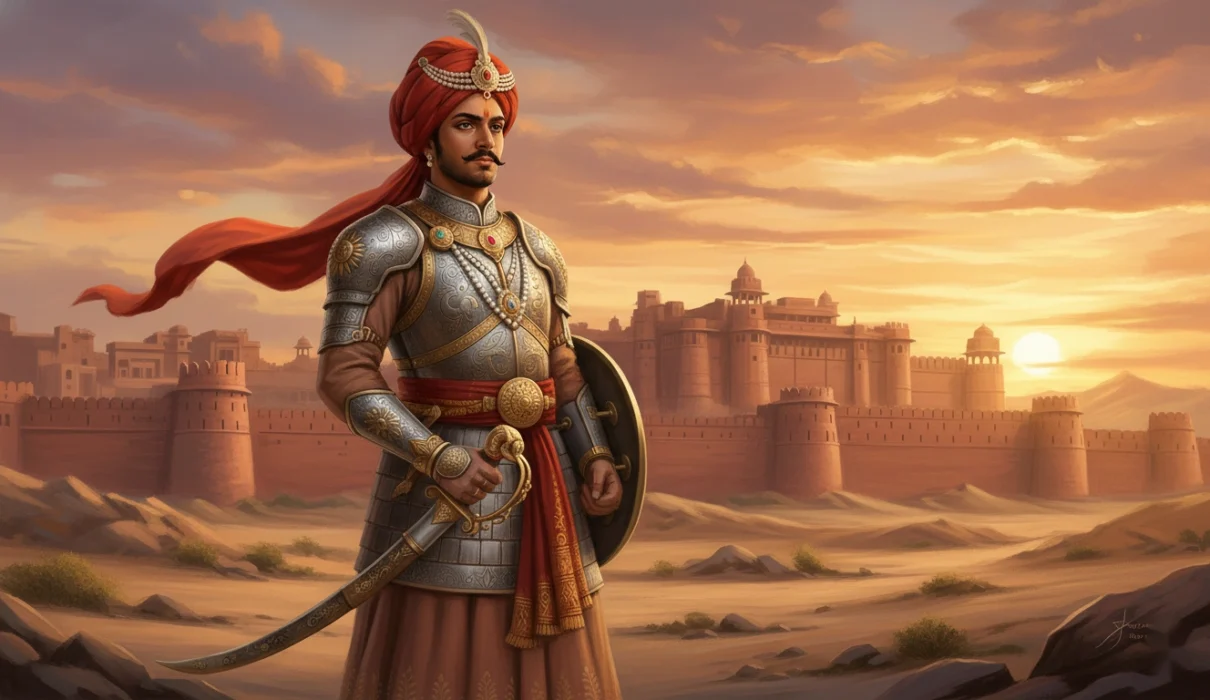
Their preferred weapon was often the curved Indian sword known as the Talwar, designed for fast and powerful strikes.
Rajput soldiers trained from a young age in:
- Sword fighting
- Horseback combat
- Archery
- Battlefield strategy
Many historical battles demonstrated Rajput courage, such as the resistance of Maharana Pratap against the Mughal emperor Akbar.
The sword became a visible symbol of Rajput warrior excellence and battlefield bravery.
Swords in Rajput Ceremonies and Weddings
Even today, the sword remains a key part of Rajput social customs.
One of the most common traditions is the Rajput’s groom carrying a sword during weddings. The sword represents the groom’s promise to protect his family and uphold honor.
The wedding sword symbolizes:
- Responsibility
- Masculine strength
- Family protection
- Cultural pride
In many Rajput weddings, the groom enters the ceremony with a decorated sword, showing his connection to the ancient warrior tradition.
Types of Traditional Rajput Swords
Rajput warriors used several types of swords throughout history.
Talwar
The Talwar is the most well-known Indian sword. It has a curved blade designed for slashing attacks. Rajput soldiers commonly used it in mounted combat.
Khanda
The Khanda is a straight, double-edged sword often associated with Indian royal warriors. It is known for its strength and powerful cutting ability.
Firangi
The Firangi sword had a long straight blade often imported from Europe but fitted with Indian-style hilts.
Each of these swords played an important role in Rajput warfare and cultural symbolism.
The Sword as a Family Heritage
Many Rajput families still preserve their ancestral swords as symbols of heritage.
These swords are sometimes hundreds of years old and are treated with deep respect. They may be displayed in homes or temples and used during special ceremonies.
Such heirlooms represent:
- Family lineage
- Warrior ancestry
- Historical pride
- Cultural continuity
Keeping these swords helps younger generations stay connected to their Rajput identity.
Rajput Sword Traditions in Modern Times
Although swords are no longer used in warfare, their symbolic importance continues.
Today, swords appear in:
- Rajput weddings
- Cultural festivals
- Heritage museums
- Traditional ceremonies
- Martial arts demonstrations
They remain a powerful reminder of Rajput history and the values of courage, loyalty, and honor.
Cultural Influence of Rajput Swords
Rajput swords have influenced Indian art, literature, and folklore.
Many folk songs and stories celebrate Rajput warriors and their legendary swords. These stories help preserve the heroic image of Rajput warriors for future generations.
Films, historical books, and museums also highlight the importance of Rajput weapons and warfare traditions.
Why the Sword Still Matters in Rajput Culture
The meaning of the sword in Rajput culture goes far beyond combat.
It represents:
- Honor and self-respect
- Warrior identity
- Protection of family and kingdom
- Religious devotion
- Cultural heritage
For Rajputs, the sword remains a living symbol of their warrior spirit.
Conclusion
The sword holds a special place in Rajput culture. It is not simply a weapon but a powerful symbol of courage, honor, and tradition.
From historic battles fought by warriors like Maharana Pratap to modern Rajput wedding ceremonies, the sword continues to represent the values that shaped Rajput society.
Even today, these traditions keep the legacy of Rajput warriors alive.
The sword reminds people of a time when bravery, loyalty, and honor defined a warrior’s life.
References
- Annals and Antiquities of Rajasthan
- The Rajputs of Rajputana
- Rajasthan State Archives
- Archaeological Survey of India
