

 By
By Introduction
Wootz steel is one of the most legendary materials ever used to make swords. Long before modern steel factories existed, ancient smiths in India were producing a high-carbon steel that amazed the world. This steel later became known for its connection to Damascus swords, famous for their flowing surface patterns and cutting power.
Even today, collectors, historians, and sword makers study Wootz steel to understand why it was so special. In this guide, we will explore what Wootz steel is, where it came from, how it was made, and how it performed in swords. This article is written to be clear, factual, and useful for anyone interested in historical weapons or metallurgy.
What Is Wootz Steel?
Wootz steel is a type of high-carbon crucible steel first made in ancient India. Unlike bloomery or early forged steels, Wootz was created by melting iron with carbon inside sealed clay crucibles. This process allowed precise carbon control and produced a very clean steel.
The carbon content of Wootz steel usually ranged between 1.0% and 1.8%, which is higher than most traditional sword steels. Because of this, it could form hard carbide structures that gave the steel both strength and sharpness.
Key features of Wootz steel:
- High carbon content
- Made in crucibles, not forged from blooms
- Known for natural surface patterns
- Excellent edge retention when heat treated correctly
Origins of Wootz Steel
Ancient India
Wootz steel originated in South India, especially in regions that are now part of Tamil Nadu, Karnataka, and Andhra Pradesh. Archaeological evidence suggests that Wootz production existed as early as 300 BCE, and possibly earlier.
Indian metallurgists had deep knowledge of iron ores, plant-based carbon sources, and controlled heating. The steel was produced as small round ingots, often called Wootz cakes, which were then traded.
Spread to the Middle East
Indian Wootz steel was exported through trade routes to Persia, Central Asia, and the Middle East. Local swordsmiths forged these ingots into blades. Over time, these blades became known as Damascus steel swords, named after the trading city of Damascus rather than the place of origin.
It is important to note:
- Wootz steel is the material
- Damascus steel is the forged blade made from Wootz
Alternative Names of Wootz Steel Across Regions and Cultures
Wootz steel was traded widely, so different regions knew it by different names. These names often describe its appearance, origin, or blade quality. Knowing these terms helps when reading historical texts or researching old swords.
Names Used in India
- Wootz – The English term, derived from local words
- Ukku (Kannada, Telugu) – Means steel or metal
- Urukku (Tamil) – Refers to molten or refined steel
- Hindwani Steel – Used in Persian and Arabic texts to mean Indian steel
India was the original source, so many early names come from local languages describing refined high-carbon steel.
Names Used in the Middle East
- Damascus Steel – The most famous name, linked to Damascus as a trade and forging center
- Fulad (Persian) – A general term for high-quality steel
- Pulad – Variant spelling used in Central Asia
- Muhannad Steel (Arabic) – Means Indian steel, often praised in poetry
Most Middle Eastern swordsmiths imported Wootz ingots from India and forged them locally.
Names Used in Central Asia
- Bulad / Bulat – Used in Turkic and Russian regions
- Pulad-i-Hindi – Literally “Indian steel”
The word Bulat later became famous in Russian metallurgy, inspired by Wootz-type steels.
Names Used in Europe
- Damascened Steel – Early European term for patterned blades
- Oriental Steel – Used in medieval writings
- Indian Steel – Common in trade records
Europe did not produce Wootz but deeply admired blades made from it.
Modern and Academic Terms
- Crucible Steel – Technical metallurgical term
- Hypereutectoid Steel – Scientific classification based on carbon content
- True Damascus Steel – Used today to distinguish Wootz from modern pattern-welded steel
These terms are mainly used by researchers, historians, and modern bladesmiths.
Why These Names Matter
Understanding these alternative names helps to:
- Identify real Wootz blades in historical records
- Avoid confusion with modern Damascus steel
- Improve research accuracy for collectors and historians
Many old texts describe Wootz steel without using the word “Wootz” itself.
How Wootz Steel Was Made
The Crucible Process
The Wootz steel process was very advanced for its time:
- Pure iron was placed inside a clay crucible
- Carbon sources like leaves or wood were added
- The crucible was sealed to limit oxygen
- It was heated until the iron melted fully
- The steel cooled slowly inside the crucible
This slow cooling allowed carbon to form cementite (iron carbide) structures inside the steel. These structures later created the famous patterns when forged and polished.
Forging the Ingot into a Sword
Forging Wootz steel required great skill. If overheated or forged too aggressively, the carbide structure could break, ruining the pattern and performance.
Smiths had to:
- Use low forging temperatures
- Hammer slowly and evenly
- Avoid repeated reheating
This is why true Wootz blades were rare and valuable.
Wootz Steel Patterns Explained
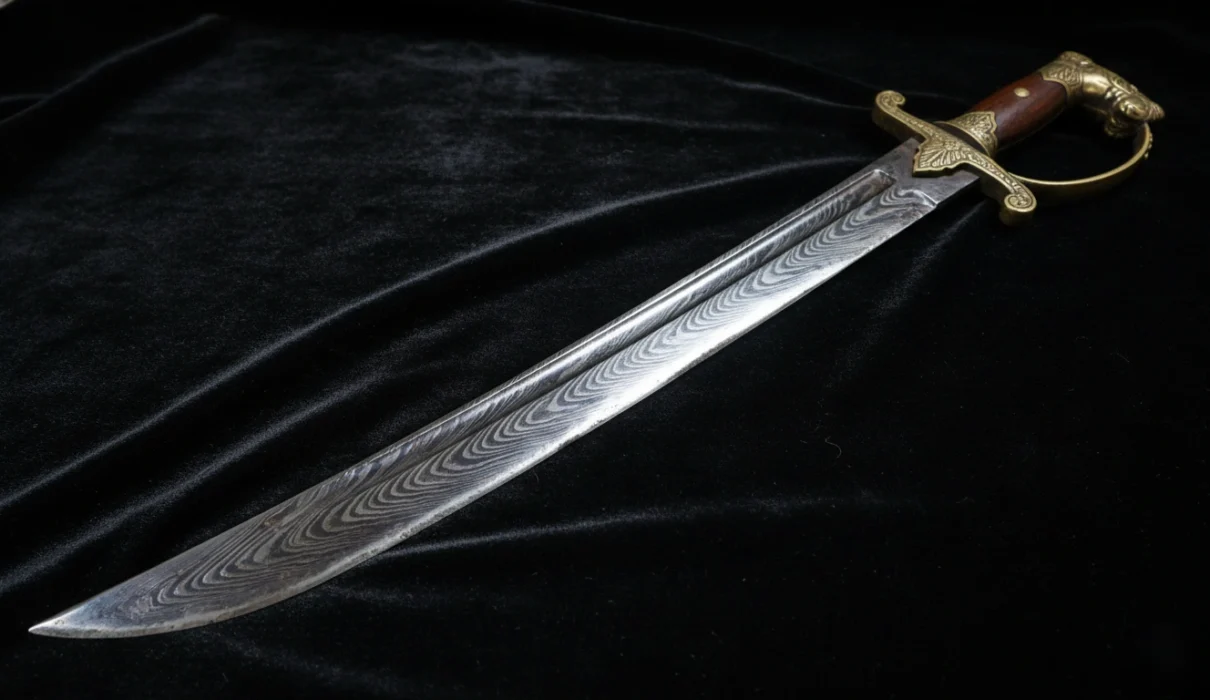
One of the most recognizable features of Wootz steel swords is the watered or flowing pattern on the blade surface. These patterns are not etched or welded. They form naturally due to the internal structure of the steel.
Common pattern types include:
- Ladder patterns
- Water ripple patterns
- Rose or swirl patterns
These patterns are caused by bands of cementite within softer steel. When polished and lightly etched, the contrast becomes visible.
Performance of Wootz Steel Swords
Sharpness and Edge Retention
Wootz steel swords were known for holding a sharp edge for a long time. The high carbon content allowed very fine edges, while the internal structure supported them.
Strength and Flexibility
Despite common myths, Wootz swords were not brittle when properly made. Skilled heat treatment balanced hardness with toughness. A well-made Wootz blade could flex slightly without breaking.
Cutting Ability
Historical accounts often describe Wootz blades cutting through armor or weapons. While some stories are exaggerated, testing of recreated Wootz steel shows excellent cutting performance against soft and medium targets.
Myths and Misconceptions About Wootz Steel
Myth 1: Wootz Steel Could Cut Through Anything
No sword steel can cut through plate armor easily. Wootz steel was excellent, but it followed the same physical limits as all steels.
Myth 2: Damascus Steel and Wootz Are the Same
Modern pattern-welded Damascus steel is different. It is made by layering steels, not by crucible melting. True historical Damascus blades were made from Wootz.
Myth 3: The Secret Is Completely Lost
The original traditional methods faded during the 18th and 19th centuries, but modern metallurgists have successfully recreated Wootz steel using scientific study and experimentation.
Wootz Steel vs Other Sword Steels
Wootz vs Japanese Tamahagane
- Wootz is crucible steel with high carbon
- Tamahagane is bloomery steel folded to remove impurities
- Wootz has natural carbide patterns
- Tamahagane relies on folding for structure
Both are excellent, but very different in production and behavior.
Wootz vs European Carbon Steel
European medieval swords usually used 0.5% to 0.8% carbon steel, which was tougher but less hard. Wootz offered better edge retention but required more skill to forge.
Modern Wootz Steel Swords
Today, only a small number of bladesmiths can produce true Wootz steel. Modern recreations use controlled furnaces but follow the same principles.
Modern Wootz swords are:
- Expensive and rare
- Often made for collectors
- Sometimes used for cutting tests
- Highly valued for craftsmanship
They are not mass-produced and should be distinguished from decorative Damascus blades.
Care and Maintenance of Wootz Steel Swords
Wootz steel is high in carbon, which means it can rust if not cared for.
Basic care tips:
- Keep the blade clean and dry
- Apply light oil regularly
- Avoid touching with bare hands for long periods
- Store in a dry environment
Proper care ensures the blade lasts for generations.
If you want a complete step-by-step guide, you can read our detailed articles on category sword maintenance and care, which covers cleaning, oiling, storage, and long-term preservation in detail.
Why Wootz Steel Still Matters Today
Wootz steel represents one of humanity’s earliest achievements in advanced metallurgy. It proves that ancient cultures had deep scientific understanding, even without modern tools.
Today, Wootz steel matters because:
- It influenced global sword design
- It inspires modern bladesmiths
- It connects history, science, and art
For collectors and historians, it remains one of the most fascinating sword materials ever created.
Frequently Asked Questions (FAQs)
Is Wootz steel the same as Damascus steel?
No. Wootz steel is the raw crucible steel. Damascus steel refers to blades forged from Wootz, mainly in the Middle East.
Are Wootz steel swords still made today?
Yes, but only by a few skilled smiths. True Wootz swords are rare and costly.
Was Wootz steel invented in India?
Yes. Historical and archaeological evidence confirms India as the origin of Wootz steel.
Is Wootz steel better than modern steel?
Modern steels are more consistent and easier to control. Wootz steel is special for its structure, history, and craftsmanship, not mass efficiency.
Why did Wootz steel production decline?
Colonial trade changes, industrial steel production, and loss of traditional knowledge led to its decline in the 18th and 19th centuries.
