 By
By Table of Contents
Introduction
Viking swords are among the most famous weapons in history. They are strongly linked with the image of Viking warriors crossing seas, raiding lands, and fighting with shield and sword. But these swords were not simple tools. They were expensive, carefully made, and deeply respected.
From around 800 AD to 1100 AD, Viking swords evolved in design, quality, and purpose. They were not owned by every warrior. In fact, many Vikings used axes or spears. A sword showed wealth, power, and honor.
In this guide, we will explain Viking swords in full detail. You will learn about the different types of Viking swords, how they are classified, their size and length, the materials used to make them, their history, and how Viking smiths forged them.
What Is a Viking Sword?
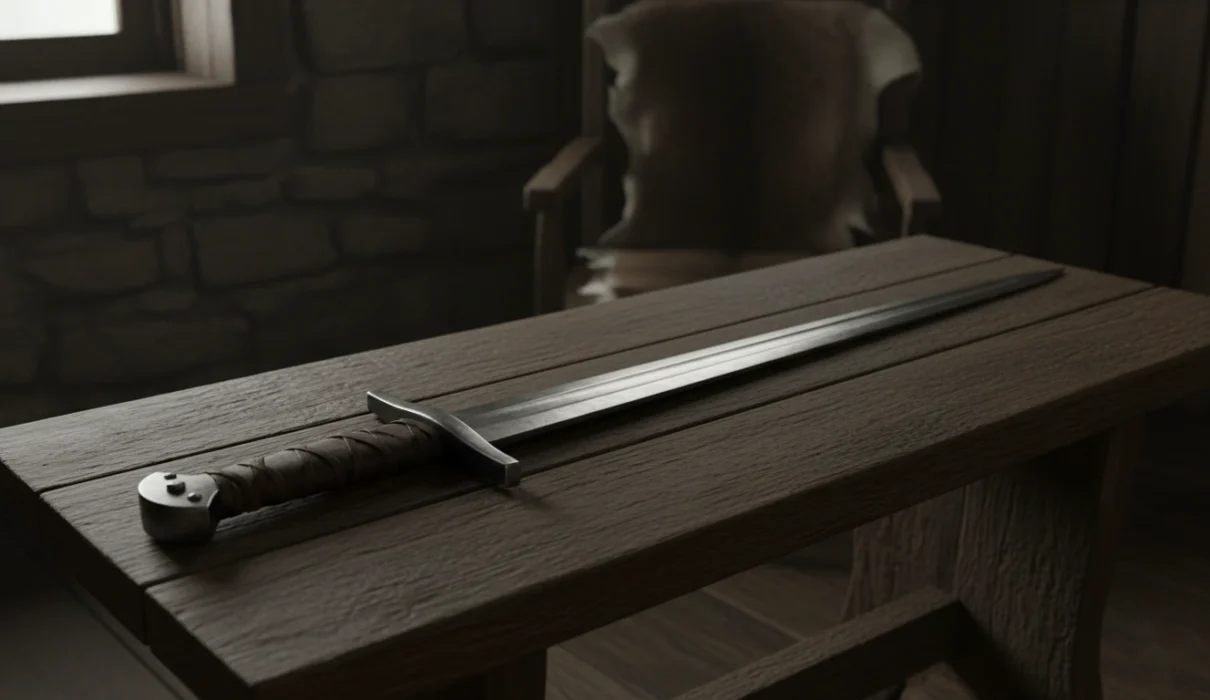
A Viking sword is a straight, double edged sword made for one handed use. It was usually used together with a shield. These swords were designed mainly for cutting, but they could also thrust when needed.
Most Viking swords had:
- A straight blade
- Two sharp edges
- A central fuller running along the blade
- A short guard
- A heavy pommel to balance the blade
The design focused on balance and speed rather than brute force.
Why Viking Swords Were So Valuable
Swords were the most valuable weapon a Viking could own. Making a sword took time, skill, and good materials. Iron and steel were not easy to produce, and high quality steel was often imported.
Because of this:
- Swords were often passed down through families
- Many swords were given names
- Swords were buried with their owners
- Decoration showed the owner’s status
A sword was not just a weapon. It was part of a warrior’s identity.
Types of Viking Swords
Viking swords are mainly classified using the Petersen typology. This system groups swords based on the design of the hilt, not the blade.
The typology uses letters from A to Z, including some special types like Æ. These types show how sword design changed over time during the Viking Age.
Early Viking Sword Types
These are some of the oldest sword designs used by Vikings.
Type A
Type A swords are among the earliest Viking swords. They have very simple hilts with basic guards and pommels. Decoration is rare or minimal.
These swords reflect early development stages and were likely influenced by earlier European designs.
Type F
Type F swords appeared mainly in the early 9th century. They usually have plain iron hilts and simple shapes.
Some Type F swords had single edged blades, but most were double edged. These swords were practical and functional rather than decorative.
Type G
Type G swords are rare. They are considered experimental designs.
They sometimes feature:
- Spiral shaped guards
- Block style pommels
These designs did not become common, which is why Type G swords are not often found.
Decorated and High Status Viking Swords
As Viking society became richer through trade and raids, sword decoration became more common.
Type D
Type D swords are highly decorated. They often include:
- Animal patterns
- Bronze inlays
- Complex designs
These swords clearly belonged to high status individuals such as leaders or wealthy warriors.
Type E
Type E swords are decorated with bronze and silver. They are found across Scandinavia and Ireland, showing how widely Viking swords were traded.
These swords were especially popular in the early 9th century.
Type H and Type I
These types show how decoration styles evolved.
- Type H continues older decoration traditions
- Type I often has flatter guards and simpler shapes
They reflect changes in taste and practical use during the later Viking Age.
Late and Transition Viking Sword Types
These swords appear near the end of the Viking Age and show a clear shift toward medieval sword design.
Type Y, Z, and Æ
These types have:
- Larger guards
- Bigger pommels
- Simpler overall design
- Longer blades in many cases
Type Z is usually found at the very end of the Viking Age. These swords mark the transition from Viking swords to early medieval knightly swords.
Common Features of Viking Swords
Despite different types, most Viking swords shared key features.
Hilt Design
The hilt was the main feature used to identify sword types. Over time, hilts evolved from complex multi lobed shapes to simpler designs.
Double Edged Blades
Most Viking swords were double edged. This allowed the warrior to cut from both sides without adjusting grip.
Single Handed Use
Viking swords were designed to be used with one hand. The other hand held a shield, which was essential for Viking combat.
Pattern Welding
Many Viking swords were pattern welded. This technique made blades stronger and more flexible.
Status Symbols
Decorated swords showed wealth and honor. Simple swords were tools. Decorated swords were symbols.
Average Length of a Viking Sword
Viking swords were shorter than many later medieval swords, but they were well balanced and fast.
Typical Measurements
- Blade length: 70 to 80 cm
- Overall length: Around 86 to 90 cm
- Weight: Usually between 1 and 2 kg
Variations in Length
Sword size changed over time.
- Early Viking Age swords were often longer
- 10th century swords became slightly shorter
- Late Viking Age swords became longer again
Some rare blades were as short as 60 cm, while others reached over 100 cm.
Design and Handling
Viking swords were designed to feel fast. Even though they had some forward weight, the balance allowed quick strikes and recovery.
They were deadly in close combat, especially when used with a shield wall.
Materials Used in Viking Swords
Iron
Most Viking swords used iron made from bog iron. This iron was low in carbon and very flexible.
Iron was usually used for the core of the blade.
Steel
Steel with higher carbon content was used for the cutting edges. This made the sword sharp and durable.
Some steel was imported from other regions due to its higher quality.
Pattern Welding Technique
Pattern welding involved:
- Twisting iron and steel rods
- Forge welding them together
- Creating a strong composite blade
This technique produced blades that were both flexible and hard.
Ulfberht Swords and Crucible Steel
Some Viking swords are marked with the name ULFBERHT.
These swords are special because:
- They used very pure, high carbon crucible steel
- The steel likely came from India or Persia
- The blades were stronger and sharper than normal
Ulfberht swords were far ahead of their time and show how advanced Viking trade networks were.
History of the Viking Sword
Origins
Viking swords evolved from the Roman spatha. The spatha was a long, straight, double edged sword used by Roman cavalry.
Over time, Norse smiths adapted this design for their own fighting style.
Early Viking Age
During the 8th and 9th centuries:
- Pattern welding became common
- Sword quality improved
- Imported Frankish swords became highly valued
Many Viking swords from this period were traded or looted from the Frankish Empire.
Middle Viking Age
During the 9th and 10th centuries:
- Sword designs became more refined
- Decoration increased
- Sword types became more standardized
Swords were now clear symbols of rank.
Late Viking Age
In the 10th and 11th centuries:
- Crucible steel appeared in some blades
- Sword designs became simpler and larger
- Viking swords slowly evolved into medieval swords
This marked the end of the classic Viking sword era.
How Viking Swords Were Made
Making a Viking sword required great skill.
Step 1: Material Selection
Smiths selected iron and steel based on availability and quality. Good steel was highly valued.
Step 2: Pattern Welding
Iron and steel rods were heated, twisted, and forge welded together. This created the core of the blade.
Step 3: Core and Edges
Soft iron formed the flexible core. Hard steel was placed along the edges for cutting power.
Step 4: Shaping the Blade
The blade was hammered into shape. A fuller was added to reduce weight while keeping strength.
Step 5: Heat Treatment
The blade was hardened by cooling, then tempered to prevent cracking or breaking.
Step 6: Hilt Assembly
The guard, grip, and pommel were added. Many hilts were decorated with silver, bronze, bone, or antler.
for deep dive read this article: sword forging
Why Viking Swords Were So Effective
Viking swords worked well because they balanced strength and flexibility.
They offered:
- Sharp cutting edges
- Strong but flexible cores
- Good balance
- Reliable performance in battle
This made them feared weapons across Europe.
Conclusion
Viking swords were not just weapons. They were symbols of honor, power, and craftsmanship. From early simple designs to richly decorated status swords and finally to medieval forms, Viking swords show the skill and knowledge of Norse smiths.
Even today, they remain some of the most respected and studied swords in history.
