
 By
By Table of Contents
Introduction
The longsword is one of the most famous swords from European history. It is often seen in medieval movies, games, and books. But the real longsword was more than just a weapon. It was a tool that required skill, training, and control.
Used mainly between the 13th and 17th centuries, the longsword was a two-handed sword with a long, straight, double-edged blade. It was designed to cut, thrust, and even strike with the handle. Knights, soldiers, and duelists relied on it in war, personal combat, and even legal battles.
In this guide, we will clearly explain the history, design, and real use of the longsword.
What Is a Longsword?
A longsword is a European sword made for two-handed use. Unlike short swords, it has a longer grip so both hands can be used together. This gives better control, power, and reach.
Main features of a longsword:
- Straight, double-edged blade
- Long grip for two hands
- Cross-shaped guard
- Heavy pommel at the end
- Sharp point for thrusting
The longsword was not slow or clumsy. Despite its size, it was well balanced and fast in skilled hands.
History and Evolution of the Longsword
Early Origins
The longsword evolved from earlier medieval swords, especially the arming sword. As armor improved, fighters needed weapons with more reach and better ability to pierce protection. Short swords were no longer enough.
By the late 1200s, swords with longer blades and grips started to appear. These early forms slowly became what we now call the longsword.
Rise and Peak Use
The longsword became most popular between 1350 and 1550. This period covers the late Middle Ages and early Renaissance.
During this time:
- Plate armor became common
- Sword fighting became more technical
- Training manuals were written
- Duels followed clear rules
The longsword was used across Europe, especially in Germany, Italy, France, and England.
Role in Medieval Life
The longsword was not only used in war. It also played a role in daily medieval society.
It was used:
- On battlefields
- In self defense
- In judicial duels
- As a symbol of status
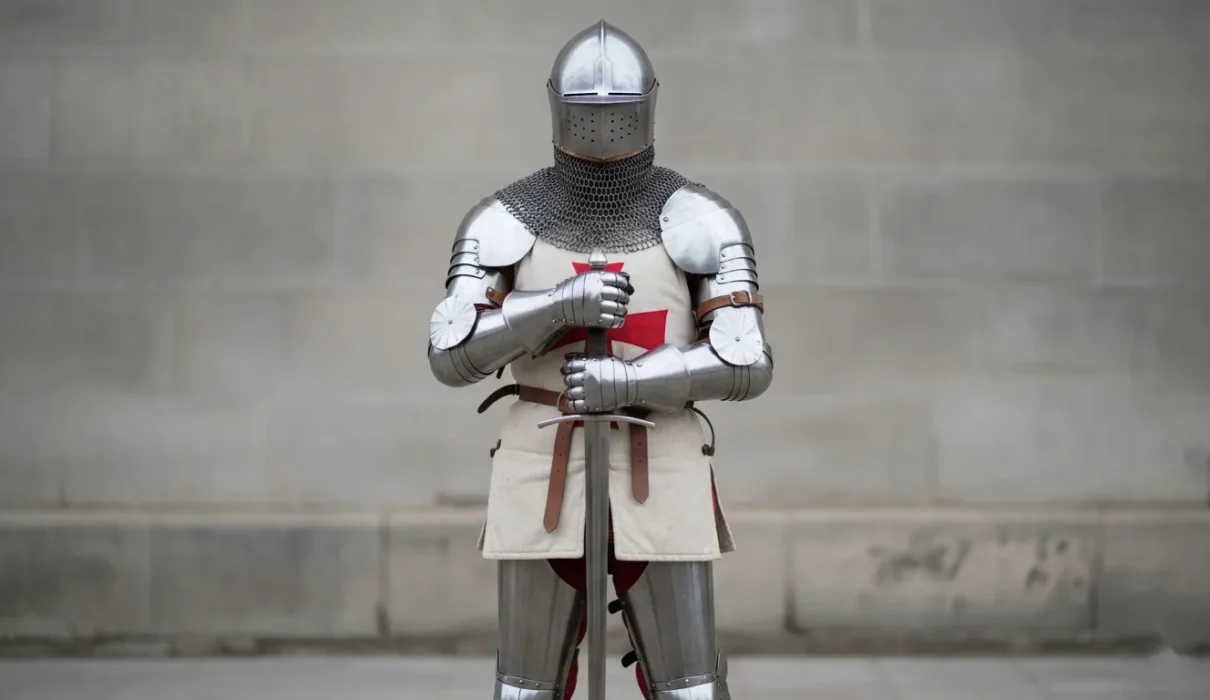
Knights often carried a longsword as a backup weapon when fighting on horseback or on foot.
Design and Physical Features
Blade Design
The blade of a longsword is straight and double-edged. This means both sides are sharp. The length usually ranges from 39 to 55 inches, including the handle.
Most blades narrow toward the tip. This shape helps with thrusting, especially against armor gaps.
Grip and Hilt
The grip is longer than that of one-handed swords. This allows:
- Two-handed control
- Stronger strikes
- Better balance
The crossguard protects the hands and can also be used to strike. The pommel at the end helps balance the sword and is sometimes used as a weapon itself.
Some longswords had finger rings near the guard to improve grip and control.
Weight and Balance
A common myth is that longswords were very heavy. In reality, most weighed between 4 and 6.6 pounds.
Because the weight is balanced along the blade and handle, the sword feels lighter and moves smoothly when used correctly.
How the Longsword Was Used in Combat
Cutting Attacks
Longswords were excellent cutting weapons. Slashing attacks were used against lightly armored opponents. Fighters aimed at arms, legs, and the neck.
Good cutting required:
- Proper stance
- Body movement
- Correct edge alignment
Strength alone was not enough.
Thrusting Attacks
As armor improved, thrusting became more important. The sharp point was used to stab into weak spots such as:
- Under the arms
- Neck gaps
- Joints
Thrusts were precise and deadly when done correctly.
Half-Swording Technique
In armored combat, fighters often used a method called half-swording. One hand grips the handle, while the other grips the blade.
This allowed:
- More control
- Stronger thrusts
- Better aim
The blade was not razor sharp in the center, making this technique possible.
Pommel and Crossguard Strikes
In close combat, the longsword was used like a blunt weapon. Fighters struck with:
- The pommel to the face or helmet
- The crossguard to knock or stun
This turned the sword into a hammer-like weapon.
Longsword Fighting Styles and Training
Historical Martial Arts
Longsword combat was taught through organized systems. The most famous is the German school of fencing, linked to Johannes Liechtenauer.
Other schools existed in Italy and France. These systems focused on:
- Timing
- Distance
- Footwork
- Flowing movement
Training Methods
Fighters trained for years. Practice included:
- Guard positions
- Stepping and balance
- Controlled sparring
- Drills from manuals
Skill mattered more than raw strength.
Longsword vs Armor
Against full plate armor, cutting was less effective. Fighters adapted by:
- Using thrusts
- Targeting weak spots
- Using half-swording
- Applying leverage and pressure
This shows how the longsword evolved with changes in warfare.
Use Beyond the Battlefield
Judicial Duels
In medieval Europe, some legal cases were settled by combat. These were called judicial duels.
The idea was simple. God would protect the innocent. The longsword was often chosen because it tested skill, endurance, and control.
Symbol of Rank and Honor
The longsword was also a symbol of knighthood and honor. It appeared in ceremonies, oaths, and royal events. Carrying a longsword showed status and training.
Legacy of the Longsword
Today, the longsword is still studied through Historical European Martial Arts (HEMA). Enthusiasts around the world train using old manuals and safe practice swords.
The longsword remains popular in:
- Movies
- Video games
- Books
- Historical reenactments
Its design and techniques still inspire people today.
Frequently Asked Questions (FAQs)
Was the longsword heavy to use?
No. Most longswords were well balanced and lighter than people expect.
Could a longsword be used with one hand?
Yes, but it was designed mainly for two-handed use.
Was the longsword effective against armor?
Yes, especially when using thrusts and half-swording techniques.
How is a longsword different from a greatsword?
A greatsword is larger, heavier, and used mainly on open battlefields.
Are longsword techniques still practiced today?
Yes. HEMA groups actively train and study longsword fighting.
