

 By
By Table of Contents
Choosing between a real sword and a decorative sword can be confusing, especially if you are new to collecting or buying swords. Both look impressive, but they serve very different purposes. Buying the wrong one can lead to wasted money or even safety risks.
In this guide, you will learn the real difference between these two types, their uses, pros and cons, and how to choose the right one based on your needs.
What Is a Real Sword?
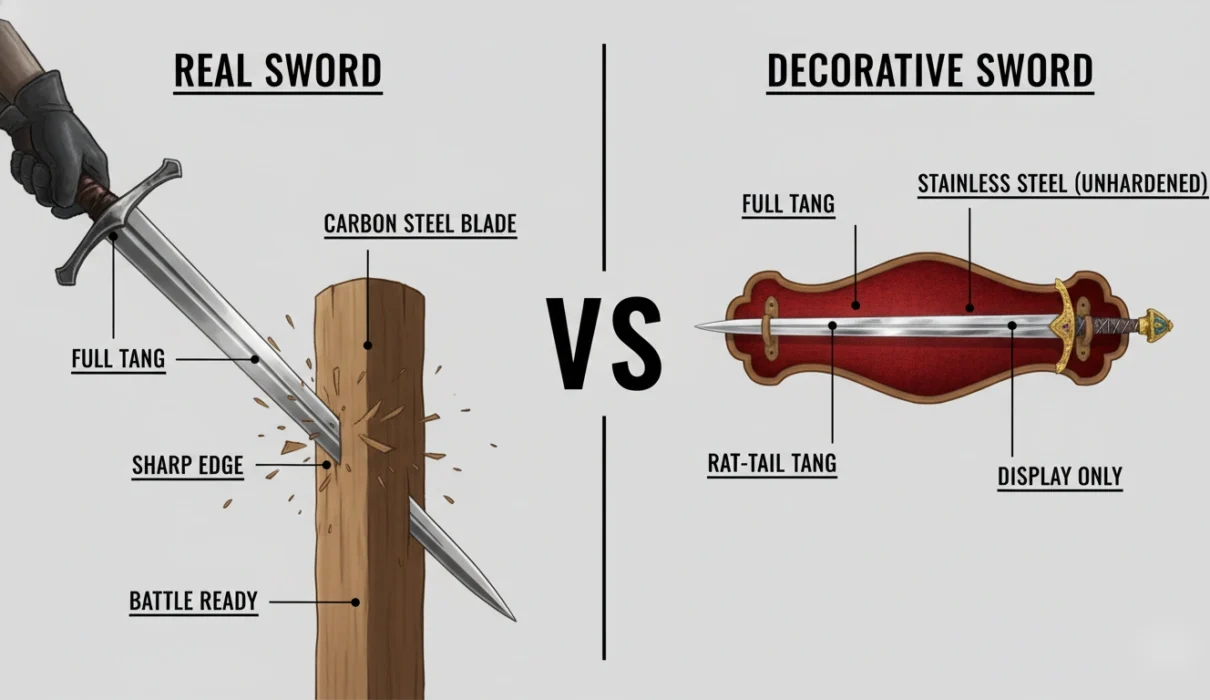
A real sword is made for actual use. It is designed for cutting, practice, or historical accuracy. These swords are built using proper materials and traditional or modern forging methods.
Key Features of Real Swords
- Made from high-quality steel (like carbon steel)
- Proper heat treatment for strength and flexibility
- Sharp edge (or can be sharpened)
- Full tang construction (blade extends into the handle)
- Balanced for handling and movement
Common Uses
- Martial arts training
- Historical reenactments
- Cutting practice (test cutting)
- Serious collectors
A real sword is not just for display. It is a functional weapon or tool, and it must be handled with care.
What Is a Decorative Sword?
A decorative sword is made mainly for display. It focuses more on looks than performance.
Key Features of Decorative Swords
- Made from stainless steel or low-quality metal
- Not properly heat-treated
- Often has a partial or weak tang
- Dull edge
- Designed for visual appeal
Common Uses
- Home decoration
- Wall displays
- Cosplay and costumes
- Gifts
These swords may look sharp and detailed, but they are not safe for actual use.
Real Sword vs Decorative Sword: Core Differences
1. Purpose
- Real sword: Built for use
- Decorative sword: Built for display
This is the biggest difference. If you want to practice or cut, you need a real sword.
2. Material Quality
- Real sword: High-carbon steel or spring steel
- Decorative sword: Stainless steel or cheap alloys
Real swords use materials that can handle stress. Decorative swords cannot.
3. Construction
- Real sword: Full tang (strong and durable)
- Decorative sword: Rat-tail tang or glued handle
A weak tang makes decorative swords dangerous if used.
4. Sharpness
- Real sword: Sharp or sharpenable
- Decorative sword: Usually blunt
Even if a decorative sword feels sharp, it is not made to hold an edge properly.
5. Safety
- Real sword: Safe if used correctly
- Decorative sword: Unsafe for use
Trying to swing or cut with a decorative sword can cause it to break.
6. Price
- Real sword: More expensive
- Decorative sword: More affordable
You pay for quality, materials, and craftsmanship in real swords.
Pros and Cons of Real Swords
Pros
- Fully functional
- Durable and reliable
- Great for training and practice
- Higher value for collectors
Cons
- Expensive
- Requires maintenance
- Needs safe storage
- Not ideal for beginners without guidance
Pros and Cons of Decorative Swords
Pros
- Affordable
- Great for display
- Wide variety of designs
- Low maintenance
Cons
- Not functional
- Can break easily
- Unsafe if misused
- Limited long-term value
Which One Should You Buy?
The right choice depends on your purpose. Let’s break it down clearly.
Buy a Real Sword If:
- You want to practice sword techniques
- You are interested in martial arts
- You want a historically accurate piece
- You plan to do cutting practice
A real sword is an investment. It is made for serious use and long-term value.
Buy a Decorative Sword If:
- You want something for display
- You are decorating your room or office
- You need a prop for cosplay
- You are buying a gift
Decorative swords are perfect if your focus is appearance, not performance.
Important Buying Tips
1. Check the Tang
Always look for full tang if buying a real sword. This ensures strength and durability.
2. Know the Steel Type
Good real swords use:
- 1045, 1060, or 1095 carbon steel
- Spring steel like EN45 or 5160
Avoid stainless steel for functional swords.
3. Avoid Fake Listings
Many sellers market decorative swords as “battle ready.” Always read details carefully.
4. Balance and Weight
A real sword should feel balanced, not too heavy or awkward.
5. Buy from Trusted Sellers
Choose sellers with good reviews and clear product details.
Common Mistakes to Avoid
- Buying a decorative sword thinking it is real
- Using a display sword for cutting
- Ignoring safety and maintenance
- Choosing based only on looks
These mistakes can lead to damage or injury.
Maintenance Differences
Real Sword Maintenance
- Regular cleaning
- Oiling to prevent rust
- Proper storage
- Sharpening when needed
Decorative Sword Maintenance
- Dusting
- Occasional cleaning
Real swords require more care, but they last much longer.
for deep dive checkout this sword maintainance
Legal Considerations
Before buying any sword, check local laws. In some areas, owning or carrying a real sword may have restrictions.
Decorative swords are usually easier to own, but rules still vary.
Final Thoughts
The choice between a real sword and a decorative sword comes down to your purpose.
If you want performance, durability, and authenticity, go for a real sword. If your goal is display, style, or gifting, a decorative sword is the better option.
Do not mix the two. A decorative sword is not meant to be used, and a real sword should not be treated like a simple showpiece.
Make your choice based on how you plan to use it, not just how it looks.
FAQs
Can a decorative sword be sharpened?
It is not recommended. The material is not strong enough to hold a proper edge.
Are real swords legal in India?
Ownership laws vary by state. It is best to check local rules before buying.
How can I tell if a sword is real?
Check the material, tang construction, and seller details. Real swords are made from carbon steel and have full tang.
Are decorative swords safe for kids?
They are safer than real swords but still should be handled carefully.
What is the best beginner sword?
A simple carbon steel sword with proper balance and full tang is a good starting point.
References
- Oakeshott, Ewart. The Sword in the Age of Chivalry
- Williams, Alan. The Knight and the Blast Furnace
- Royal Armouries Museum – Sword construction guides
- Arms and Armor Industry standards on blade forging
- Historical European Martial Arts (HEMA) resources
